


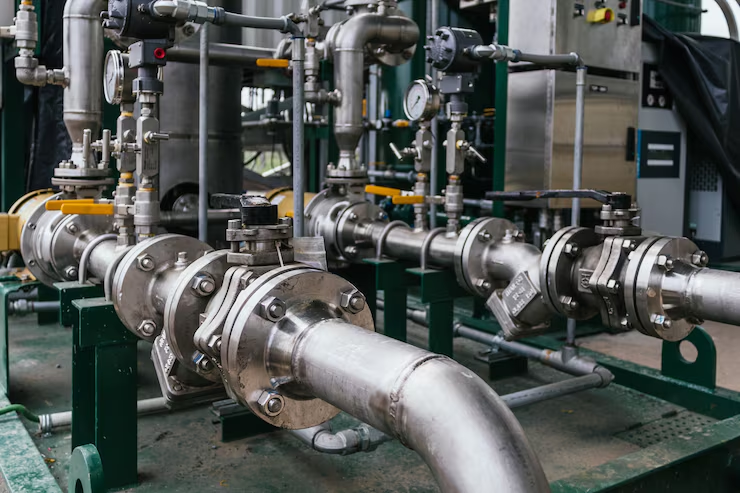
Piping systems are among the most critical components of industrial facilities. They transport liquids, gases, steam, chemicals, and other process fluids while operating under varying pressures, temperatures, and environmental conditions. Poor piping design can lead to excessive stress, equipment damage, leaks, fatigue failures, and costly plant shutdowns.
Piping Stress Analysis is an essential engineering discipline that evaluates how piping systems respond to internal pressure, thermal expansion, dead weight, wind, seismic activity, vibration, and other external loads. Modern engineering software such as CAESAR II and AutoPIPE enables engineers to create accurate computer models, simulate operating conditions, and verify compliance with ASME piping codes such as ASME B31.1 and ASME B31.3.
Professional stress analysis helps ensure piping systems remain safe, reliable, and fully compliant throughout their operational life.
What Is Piping Stress Analysis?
Piping Stress Analysis is the process of evaluating stresses, loads, movements, and reactions within a piping system under different operating and environmental conditions.
The analysis determines whether the piping system can safely withstand:
- Internal pressure
- Dead weight
- Thermal expansion
- Thermal contraction
- Wind loads
- Earthquake forces
- Dynamic loading
- Water hammer
- Equipment nozzle loads
- Occasional loads
The objective is to prevent overstressing and ensure safe long-term operation.
Why Piping Stress Analysis Is Important
Industrial piping systems connect critical equipment throughout processing plants.
Without proper analysis, systems may experience:
- Pipe cracking
- Weld failures
- Equipment damage
- Excessive vibration
- Leakage
- Pipe support failures
- Expansion joint damage
- Misalignment
- Fatigue failures
- Unexpected shutdowns
Professional engineering identifies these risks before construction begins.
Understanding ASME Compliance
Industrial piping systems must comply with recognized engineering standards.
Common ASME piping codes include:
- ASME B31.1 for Power Piping
- ASME B31.3 for Process Piping
- ASME B31.4 for Liquid Pipelines
- ASME B31.8 for Gas Transmission Systems
Each code establishes allowable stresses, design requirements, testing procedures, and safety factors for different industries.
Overview of CAESAR II
CAESAR II is one of the world’s most widely used piping stress analysis software packages.
It performs detailed evaluations of:
- Pipe stress
- Support loads
- Equipment reactions
- Thermal expansion
- Dynamic analysis
- Seismic loading
- Wind loading
- Pressure loading
- Buried piping
- Expansion joint performance
The software is widely accepted across the oil and gas, power, petrochemical, mining, and manufacturing industries.
Overview of AutoPIPE
AutoPIPE is another industry-leading software solution for piping flexibility and stress analysis.
Its capabilities include:
- Three-dimensional piping modeling
- Code compliance verification
- Pipe support analysis
- Dynamic analysis
- Equipment nozzle evaluation
- Thermal expansion analysis
- Seismic assessment
- Wind analysis
- Pressure loading evaluation
AutoPIPE integrates efficiently with many industrial design platforms.
Types of Loads Considered
Professional piping analysis evaluates multiple loading conditions simultaneously.
These include:
- Sustained loads
- Operating loads
- Occasional loads
- Expansion loads
- Dynamic loads
- Environmental loads
- Installation loads
- Hydrostatic testing loads
Each loading condition affects piping behavior differently.
Material Properties
Accurate material properties are essential for reliable stress analysis.
Engineers consider:
- Elastic modulus
- Thermal expansion coefficient
- Yield strength
- Tensile strength
- Density
- Poisson’s ratio
- Temperature-dependent properties
Material selection directly influences piping flexibility and allowable stresses.
Thermal Expansion Analysis
Temperature changes cause pipes to expand and contract. Piping Stress Analysis provides engineering guidance for reliable piping systems.
If expansion is restrained, excessive stresses develop.
Engineering evaluates:
- Thermal growth
- Anchor loads
- Support reactions
- Equipment nozzle forces
- Pipe displacement
Expansion loops and flexible routing often reduce thermal stresses.
Pressure Stress Evaluation
Internal pressure creates stresses within the pipe wall.
Analysis considers:
- Hoop stress
- Longitudinal stress
- Combined stress
- Pressure thrust
- Local stress concentrations
Proper wall thickness and material selection ensure safe operation.
Pipe Support Design
Pipe supports maintain stability throughout the piping system.
Common support types include:
- Rigid supports
- Spring hangers
- Constant supports
- Guides
- Line stops
- Anchors
- Sway braces
- Snubbers
Support locations significantly influence piping flexibility.
Equipment Nozzle Load Analysis
Industrial equipment must not experience excessive piping loads.
Engineers evaluate nozzle forces on:
- Pumps
- Compressors
- Heat exchangers
- Pressure vessels
- Boilers
- Turbines
- Storage tanks
Proper piping flexibility protects expensive equipment.
Seismic Analysis
Facilities located in seismic regions require additional engineering.
Analysis considers:
- Ground acceleration
- Equipment movement
- Pipe support stability
- Structural interaction
- Dynamic response
Seismic-resistant piping systems improve facility reliability after earthquakes.
Wind Load Evaluation
Outdoor piping systems experience wind loading throughout their service life.
Engineering evaluates:
- Pipe diameter
- Wind pressure
- Support spacing
- Structural flexibility
- Pipe rack movement
Proper analysis reduces long-term structural fatigue.
Water Hammer Analysis
Rapid valve closure or pump shutdown can create pressure surges.
Water hammer analysis predicts:
- Pressure waves
- Pipe movement
- Anchor forces
- Equipment loads
- Surge pressure
Mitigation methods include surge tanks, relief valves, and controlled valve operation.
Dynamic Analysis
Some industrial systems experience dynamic loading from rotating equipment.
Examples include:
- Compressors
- Pumps
- Turbines
- Reciprocating machinery
- Steam systems
Dynamic analysis helps prevent vibration-related failures.
Pipe Flexibility
Piping flexibility is essential for accommodating movement.
Engineers improve flexibility using:
- Expansion loops
- Offset routing
- Expansion joints
- Flexible connectors
- Proper support spacing
Flexible systems reduce stress concentrations.
Stress Reports
Engineering software generates detailed reports including:
- Pipe stresses
- Support reactions
- Equipment loads
- Displacements
- Code compliance
- Utilization ratios
- Load combinations
These reports assist engineers during design review and regulatory approval.
Common Industrial Applications
Piping stress analysis is widely used in:
- Oil and gas facilities
- Chemical plants
- Refineries
- Power stations
- Mining operations
- Water treatment plants
- Food processing facilities
- Pharmaceutical manufacturing
- Steel plants
- LNG terminals
Each industry presents unique engineering challenges.
Points to Consider for Successful Piping Stress Analysis
Accurate Three-Dimensional Modeling
Developing a precise three-dimensional piping model ensures that all components, elevations, fittings, valves, and supports are correctly represented. Accurate geometry forms the foundation of reliable stress analysis.
Selection of the Correct ASME Code
Choosing the appropriate ASME piping code is essential because allowable stresses, load combinations, and design criteria vary depending on the application. Engineers must ensure the analysis complies with the specific code governing the project.
Comprehensive Load Evaluation
A complete stress analysis should include sustained, operating, thermal, occasional, wind, seismic, and dynamic loads. Ignoring any significant loading condition may lead to inaccurate results and unsafe designs.
Proper Pipe Support Placement
Support spacing and support type have a direct impact on pipe flexibility and stress distribution. Carefully designed support systems reduce excessive movement while allowing thermal expansion where necessary.
Thermal Expansion Management
Temperature changes can generate significant stresses in long piping systems. Expansion loops, flexible routing, and properly located anchors help control thermal movements and reduce equipment loads.
Equipment Protection
Piping should never impose excessive loads on connected equipment such as pumps, compressors, pressure vessels, or heat exchangers. Nozzle load analysis helps protect critical assets from premature failure.
Consideration of Seismic and Wind Loads
Facilities located in regions with earthquake or strong wind exposure require additional engineering evaluations. Incorporating these environmental loads improves overall system reliability.
Water Hammer Prevention
Pressure surges resulting from rapid valve operations or pump failures can damage piping systems. Water hammer analysis identifies potential problems before construction and allows engineers to implement effective mitigation measures.
Material Property Verification
Accurate material data, including temperature-dependent mechanical properties, improve the reliability of stress calculations and code compliance evaluations.
Coordination with Other Engineering Disciplines
Successful piping projects require close collaboration between piping, structural, mechanical, civil, and process engineers. Coordinated engineering reduces conflicts during construction and operation.
Detailed Documentation
Comprehensive engineering reports, support drawings, load summaries, and stress calculations simplify project reviews, inspections, maintenance planning, and future system modifications.
Independent Engineering Review
A peer review of piping models, assumptions, and stress reports helps identify potential issues before fabrication begins, improving overall project quality.
Benefits of Professional Piping Stress Analysis
Professional engineering provides numerous advantages.
These include:
- Improved piping reliability
- Greater personnel safety
- Reduced equipment damage
- Longer piping lifespan
- Lower maintenance costs
- Improved code compliance
- Reduced downtime
- Better support design
- Optimized material usage
- Increased operational efficiency
These benefits contribute to long-term plant performance.
Future Trends in Piping Stress Analysis
Industrial engineering continues to evolve through advanced technologies.
Emerging developments include:
- Artificial intelligence-assisted modeling
- Digital twin technology
- Cloud-based engineering collaboration
- Real-time stress monitoring
- Automated support optimization
- Advanced finite element integration
- Smart maintenance systems
- Three-dimensional laser scanning
- Predictive asset management
- Building Information Modeling integration
These technologies improve engineering accuracy while reducing project schedules.
Conclusion
Piping Stress Analysis using CAESAR II and AutoPIPE is a critical part of designing safe, efficient, and ASME-compliant industrial piping systems. By evaluating thermal expansion, internal pressure, equipment loads, seismic forces, wind effects, and dynamic operating conditions, engineers can identify potential issues before installation and ensure long-term system reliability. Professional stress analysis not only protects valuable equipment and infrastructure but also improves operational safety, minimizes maintenance costs, supports regulatory compliance, and enhances the overall performance of industrial facilities across a wide range of industries.
